
Authored co-living for a city that’s ready
Design-led shared housing in Budapest — research, strategy, design and delivery from a studio with a live pilot on the ground.
Investment thesis
Co-living goes beyond a trend. It is what happens when the economics of the city, the shape of a generation, and the cost of loneliness meet the same address.
A meaningful, resilient revenue upside over traditional letting — in exchange for real upfront investment, designed and managed properly. And one city combines one of the lowest entry prices, the strongest price growth in the set, and a healthy rental yield.
Horizontal: price, €/sqm, city average (Q1 2026) · Vertical: price growth, %, city average, 2 years · Bubble: relative gross yield, %, city average (H1 2026)
Source: Global Property Guide — prices per sqm (Q1 2026), two-year price growth (Q1 2024–Q1 2026), and gross rental yields (H1 2026); city averages.
Our vision for Budapest
The European co-living market has proven the model works. Our ambition for Budapest is to create a co-living experience rooted in the city’s character — one that feels distinctive locally and compelling on the global stage.
The pilot
We are turning our vision into a real project.
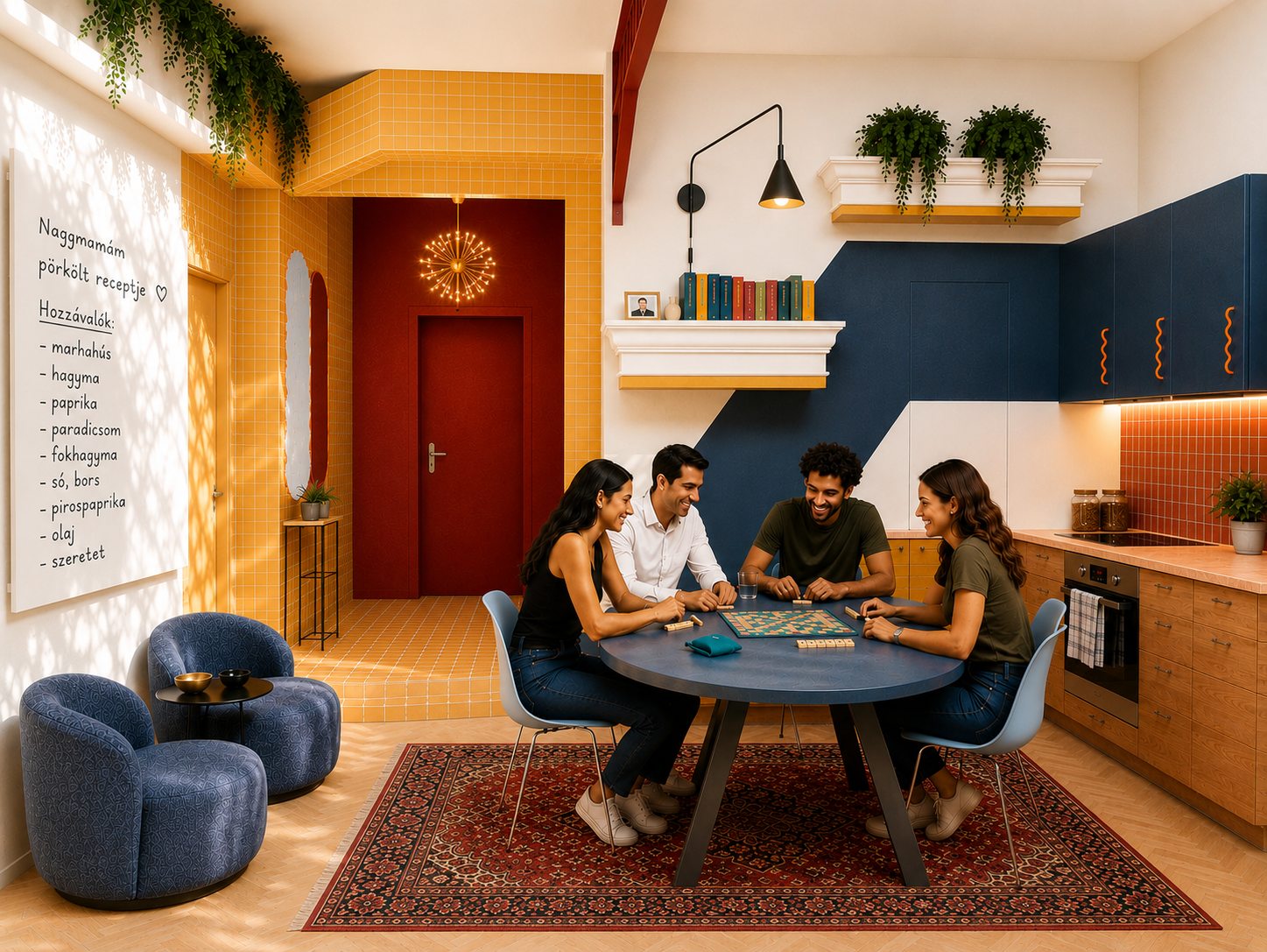
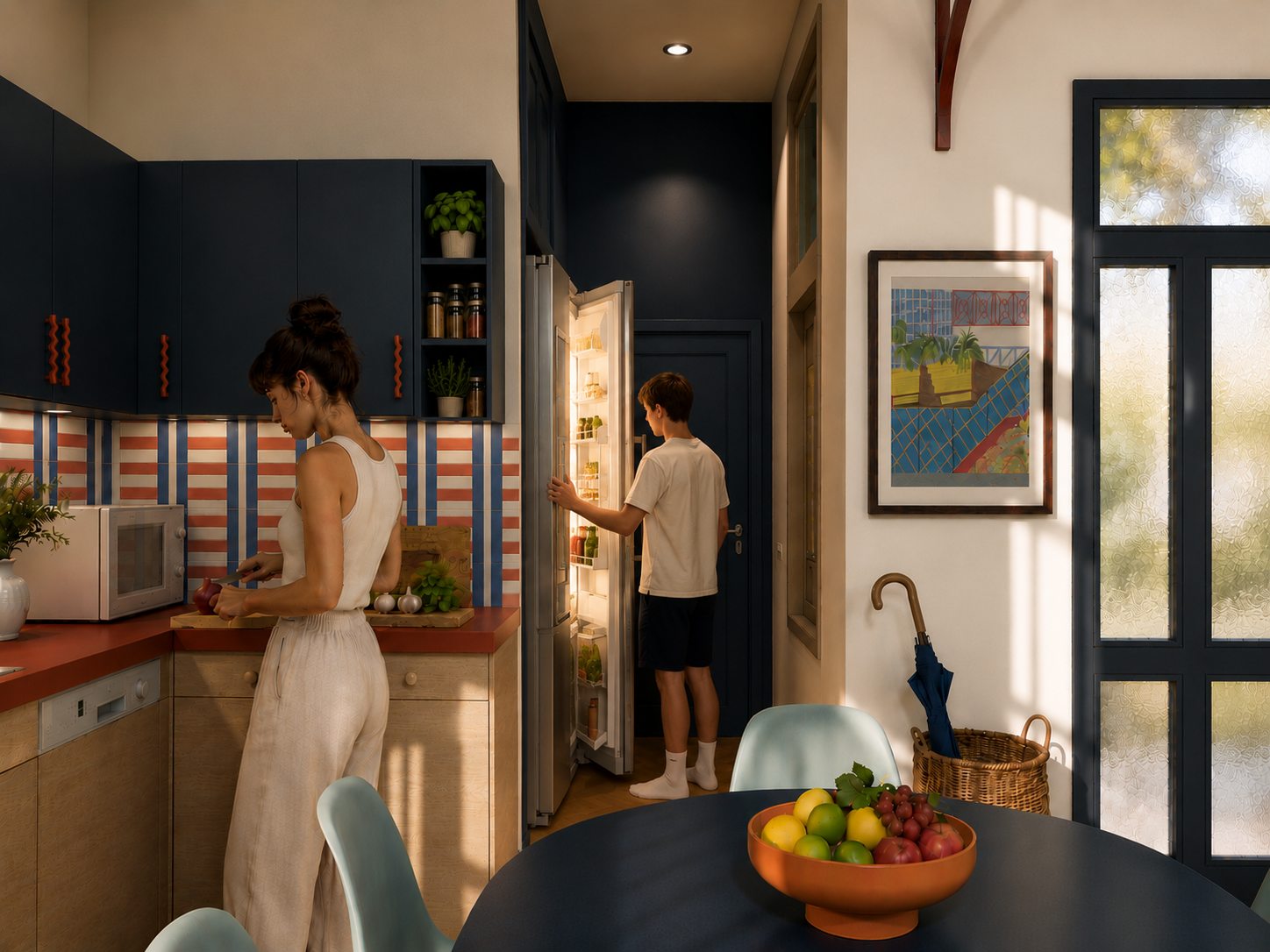
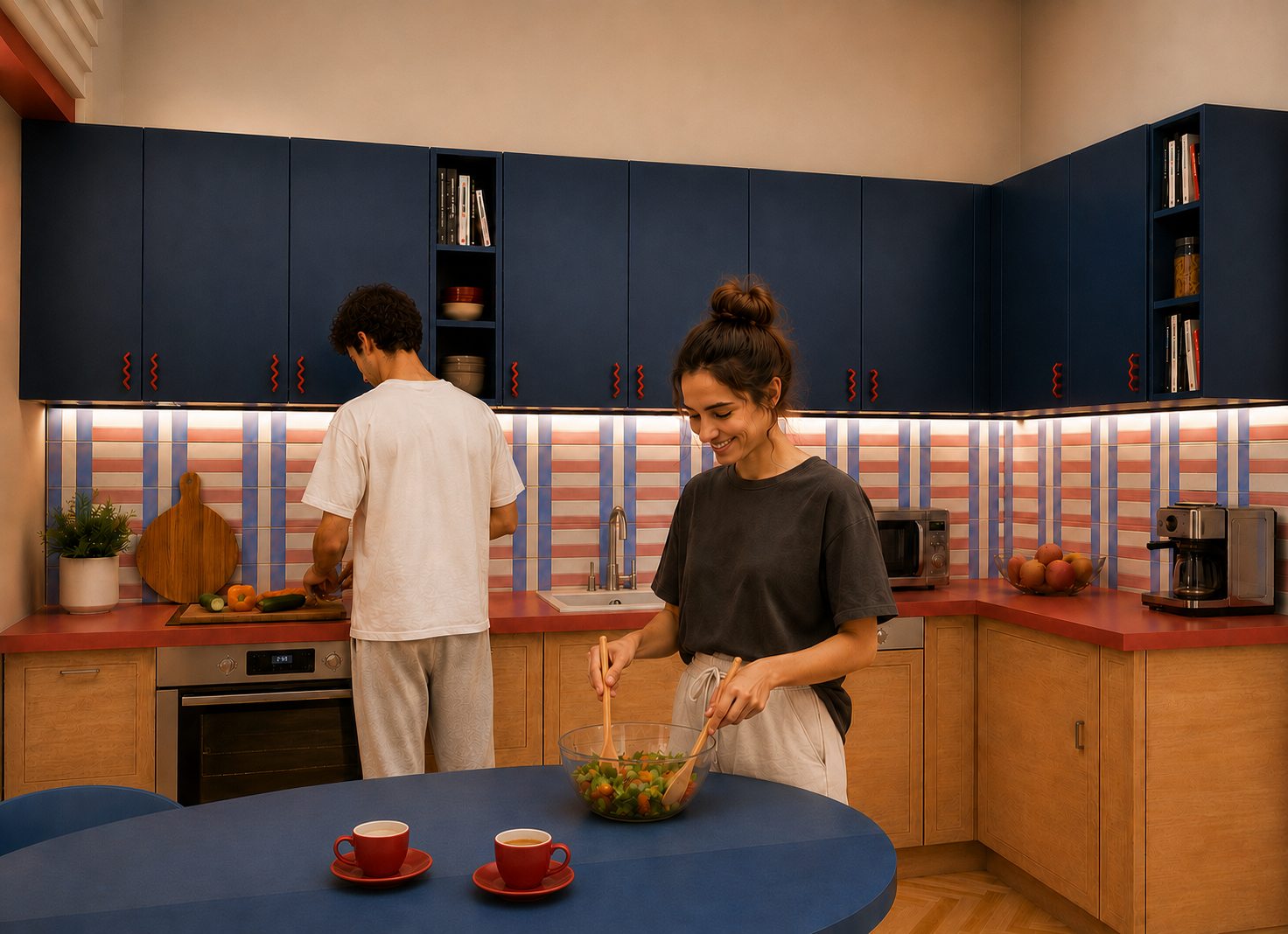
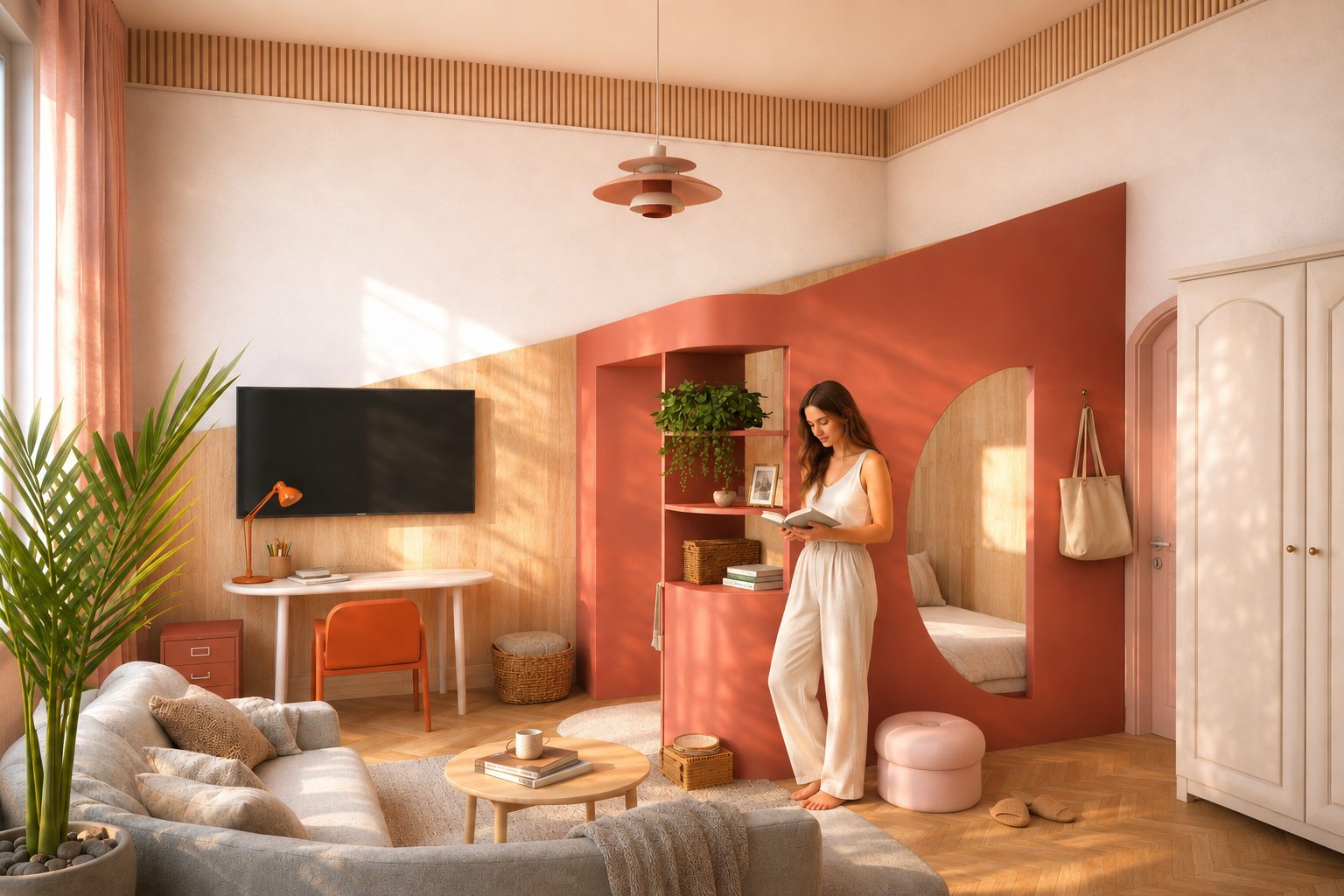
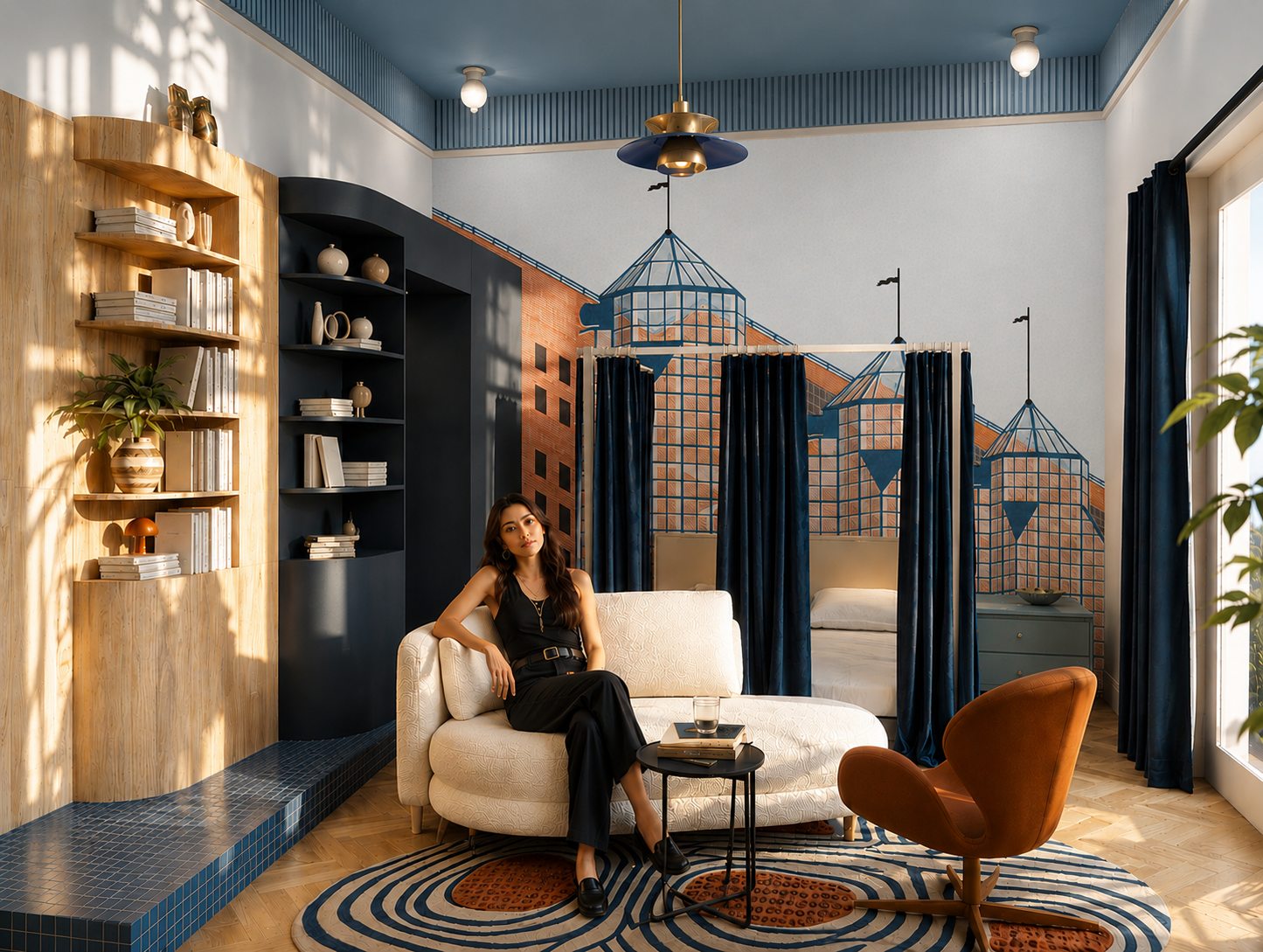
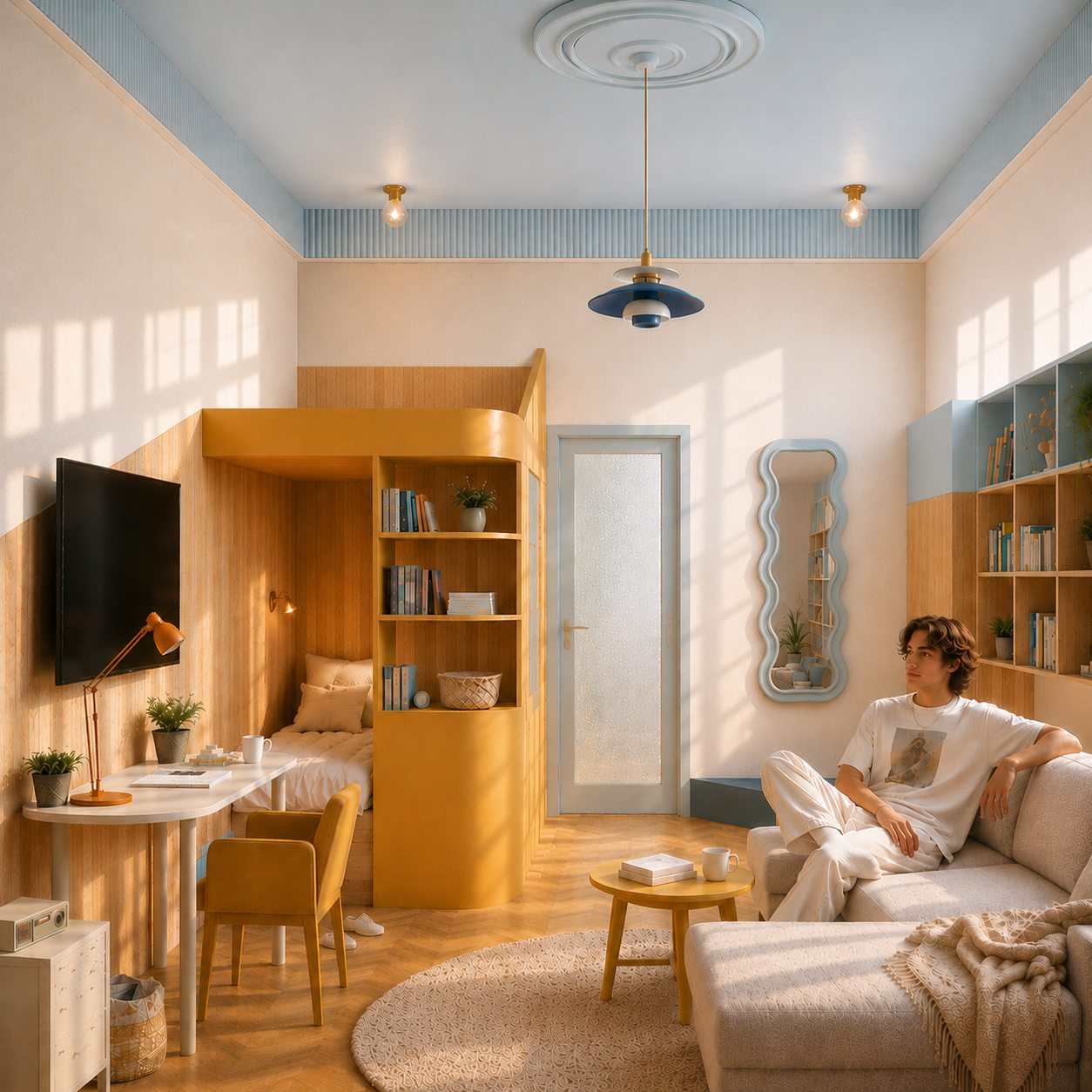
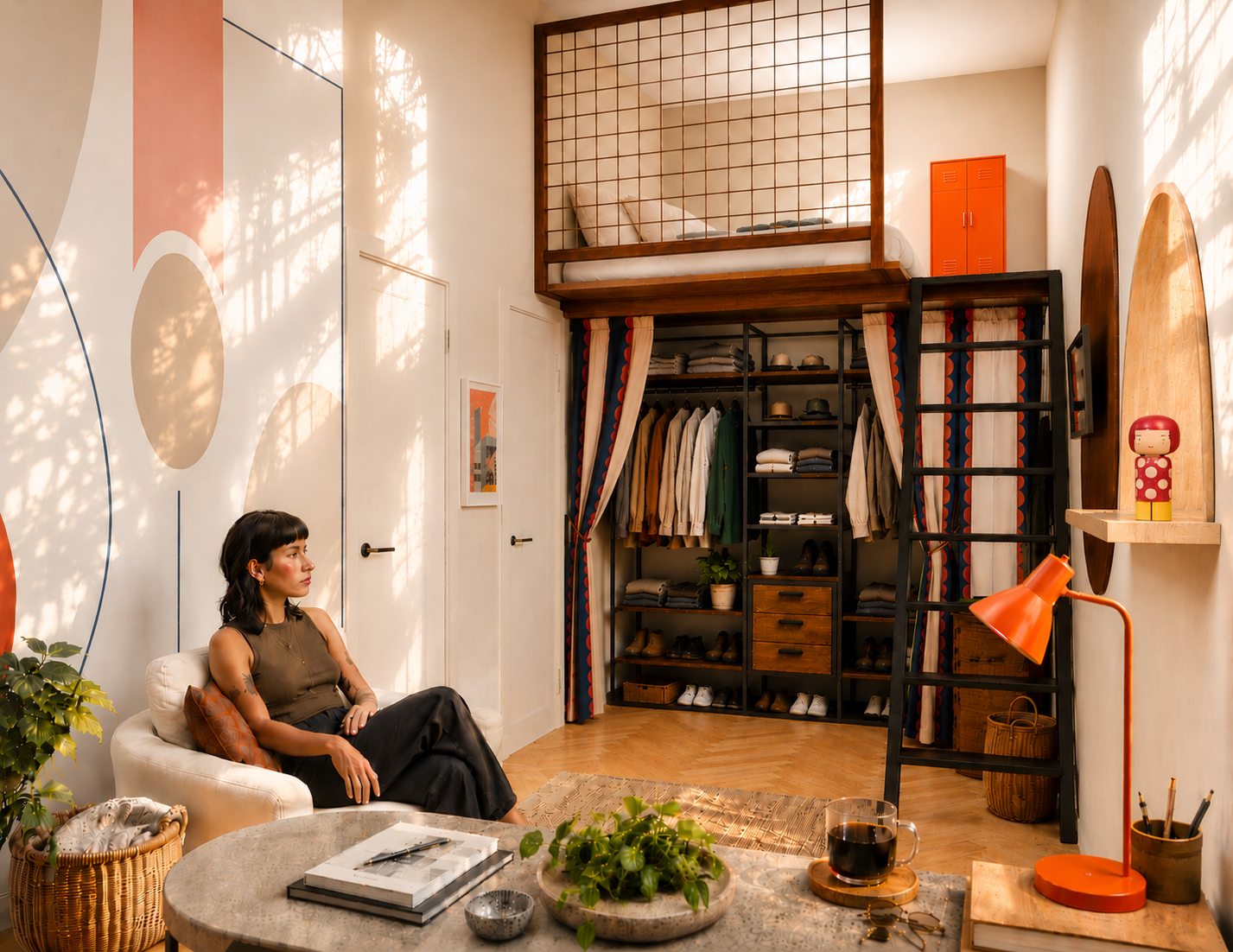
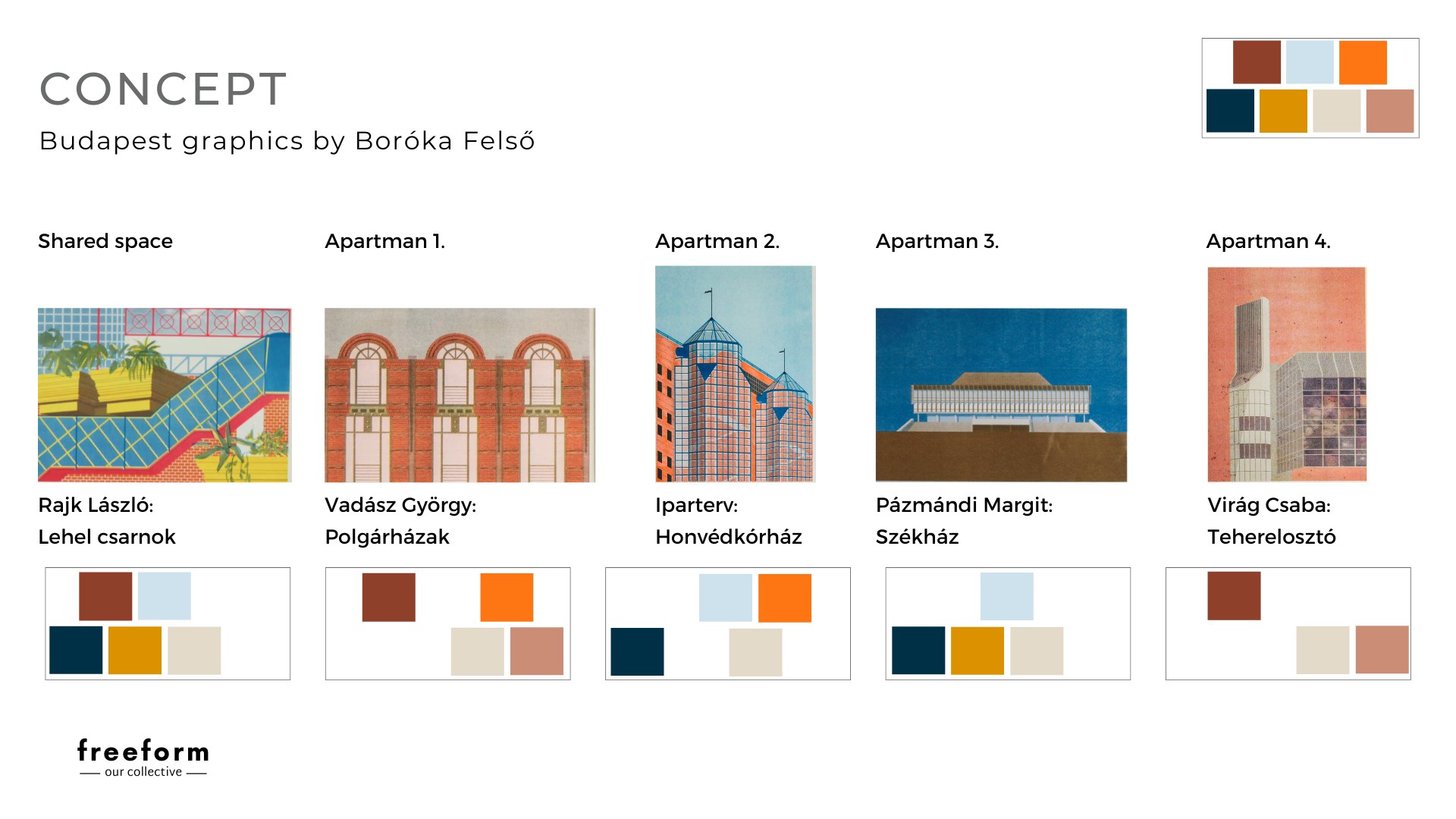
Renders: freeform · Artwork: Boróka Felső
Deep-dive
Co-living in Budapest is still a niche — one we intend to define,
and to expand. The research came first.
What co-living is, what it solves, and the research foundation behind our approach — a full study and a published series in Hungary’s leading architecture and design magazine.
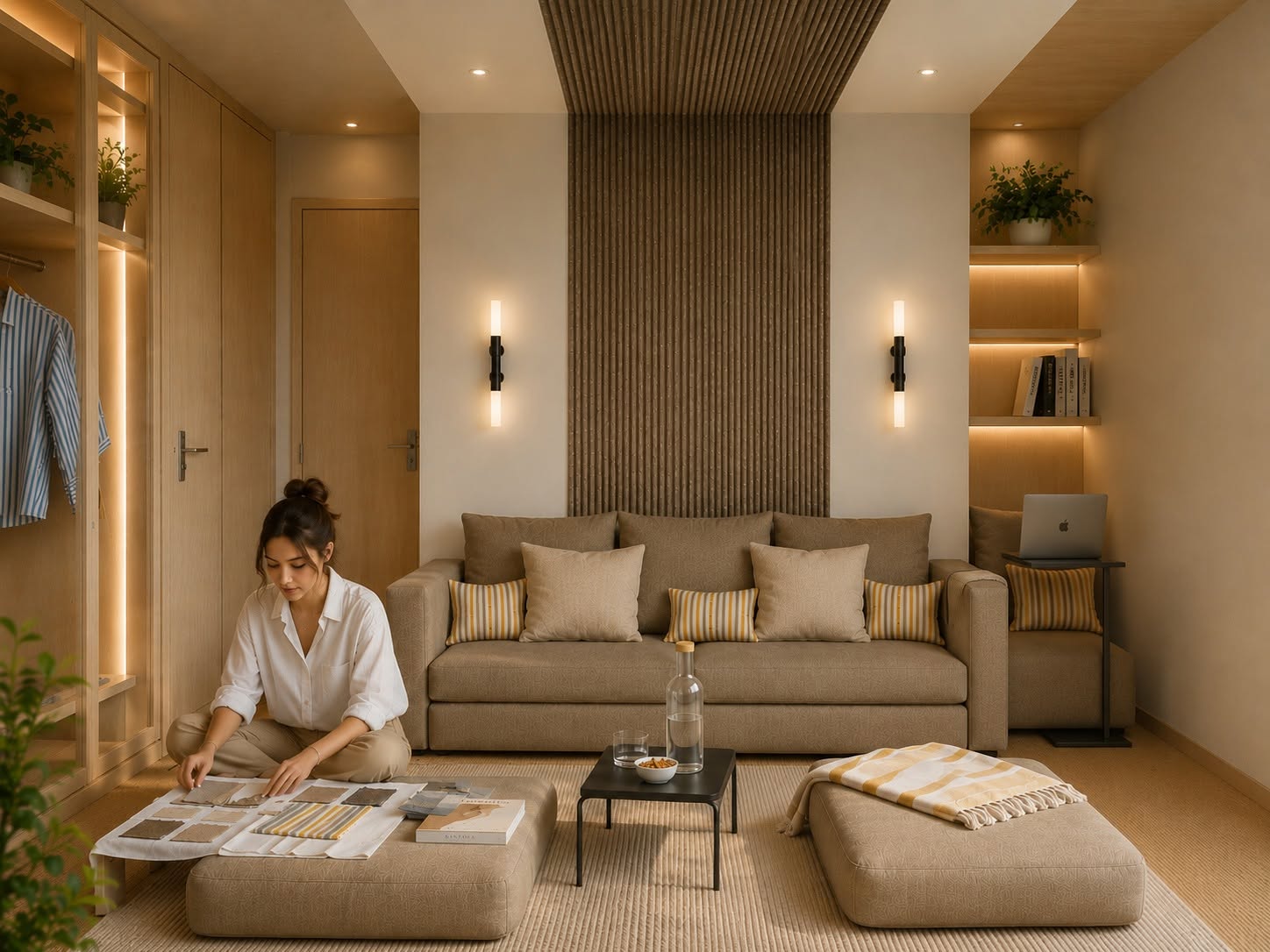 Concept design & visualization: Eszter Bolgár
Who we are
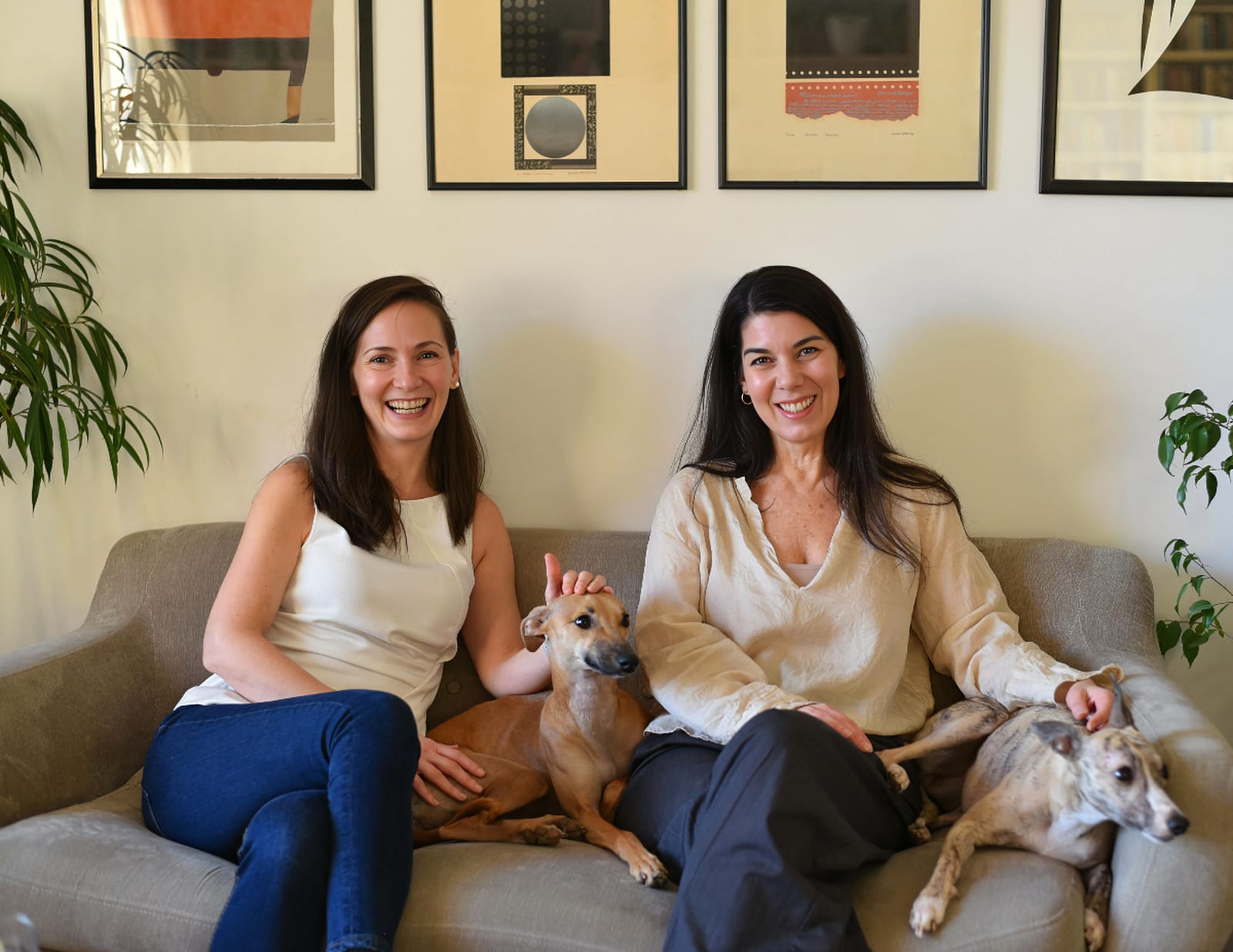 Photo: Edit Vass
Timi thinks in business outcomes — she has shaped how organisations use space across global office networks. A designer and project manager with a strategist’s eye: clear about what a space must do, who it serves, and what it returns.
Eszter has built spaces and she has critiqued them — from large-scale developer projects to hands-on construction management, carrying spaces from concept to completion. As an art historian and critic, she brings the fluency that turns a well-made space into a meaningful one.
Together, we treat space not only as an aesthetic or technical question, but as the integration of business logic, human experience, and cultural meaning.
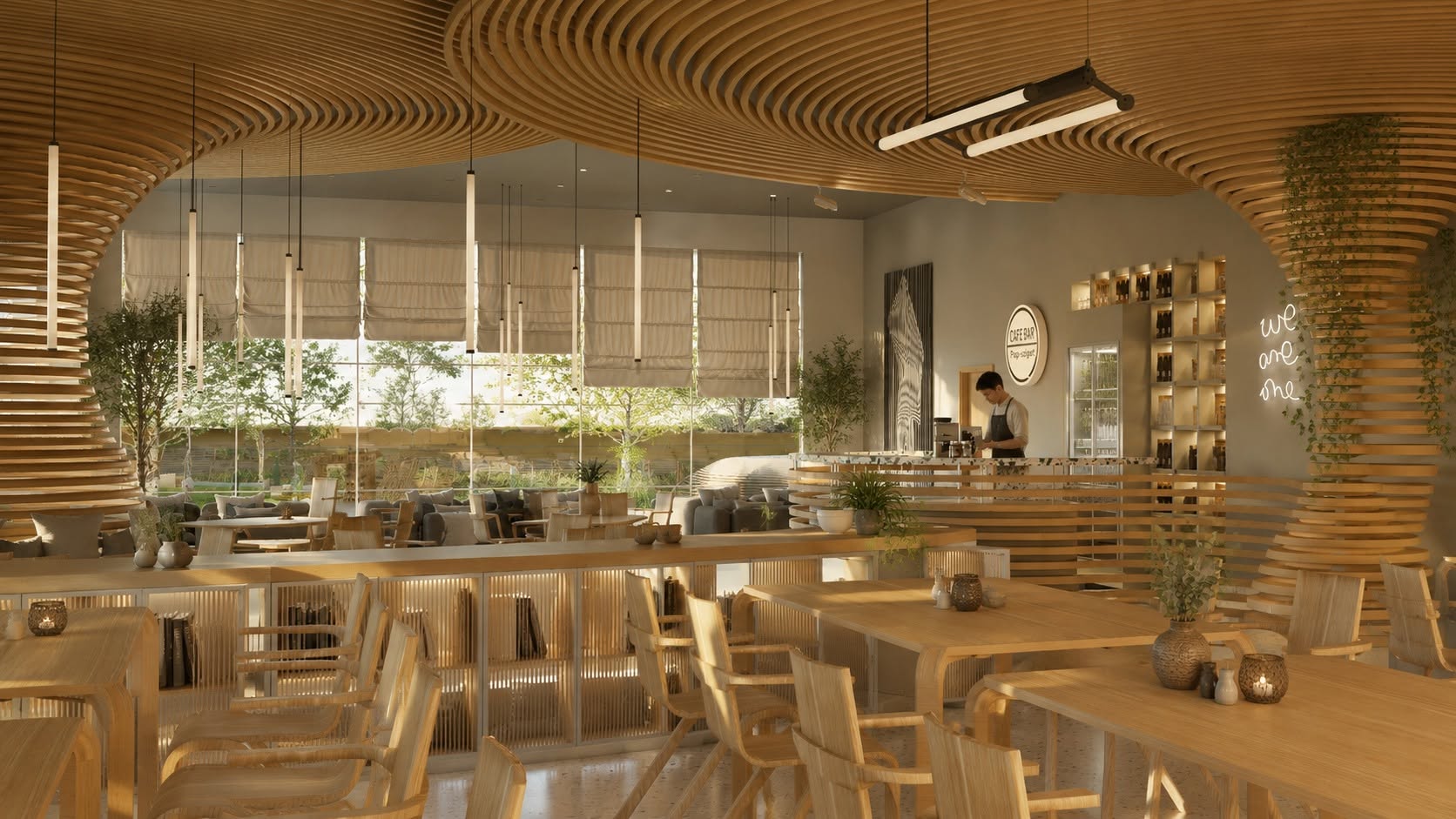 Concept design & visualization: Eszter Bolgár
Methodology & services
Every successful co-living project begins with the market, the people and the investment strategy. Design is how we bring that strategy to life.
Investor vision & business goals
Market research & feasibility
Community & experience strategy
Concept & spatial identity
Design & technical documentation
Brand & communication
Delivery & design supervision
Operations — assembled via our network
Common questions
What exactly is co-living?
Professionally managed shared housing: private rooms that are smaller but sharper, genuinely communal spaces, and a curated residential experience — designed and operated as a single coherent product. It is not a flatshare, and it is not a serviced apartment: someone is responsible for the whole experience, not just the square metres.
Why convert a property to co-living instead of letting it traditionally?
Because a well-run co-living property earns more from the same walls: more revenue per square metre than a standard furnished let, one professional relationship instead of four or five separate tenancies, and a product that does not compete on price. Conversion costs more than a refresh, so it is a long-term position — in exchange for a meaningful, more resilient revenue upside.
Why Budapest?
Among comparable European capitals, Budapest pairs one of the lowest entry prices with the EU’s fastest price appreciation — according to Eurostat, Hungarian prices have nearly quadrupled since 2015. Almost no new housing is being built, buying keeps getting further out of reach, and no design-led co-living operator has established itself yet. The full data is on the thesis page.
What returns can I expect?
We deliberately publish no generic numbers — a return depends on the property, the district and the concept, and a figure that fits every building fits none. What we can say plainly: the return has two engines — the asset appreciates with the market, and co-living makes it earn more than ordinary letting while it does. For your specific property we prepare a business case with real scenarios; that is where numbers belong.
What does freeform actually do — and what do you not do?
We are a multidisciplinary design studio. We prepare the business case, the spatial concept, the design and technical documentation, the brand, and the delivery supervision. We are not a property manager: where a project needs operations, we assemble the capability through our network and oversee it to a standard.
What kind of property works for co-living?
It scales. A single 100–150 m² apartment with 4–5 rooms is the most accessible entry; floor clusters, full residential buildings and mixed-use programmes follow. Budapest’s pre-war stock — high ceilings, generous proportions, courtyard ‘bérház’ buildings — is unusually well suited to conversion.
How do we start?
Tell us about your property through the form below. We reply within two business days — and for every serious enquiry we prepare a property-specific business case.